
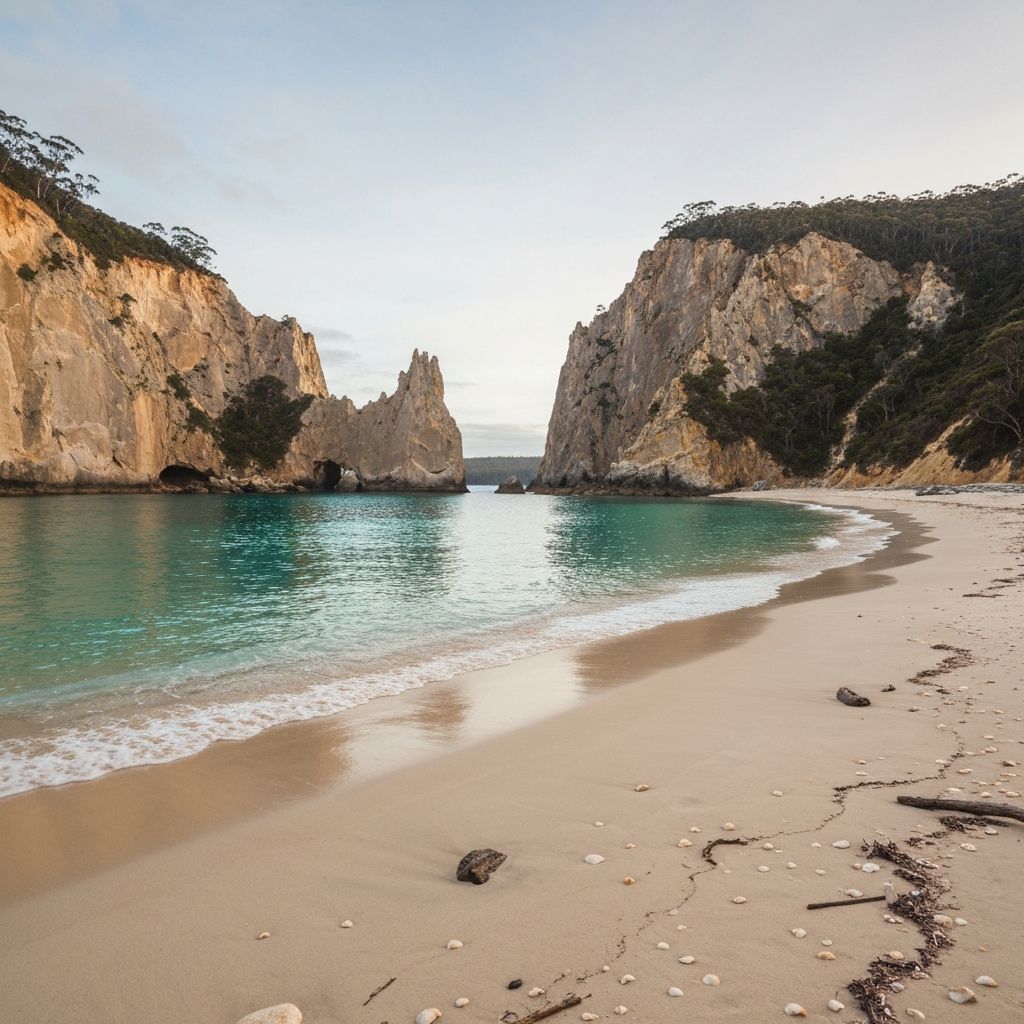
12 Hidden Gems in Tasmania: Secret Spots Locals Don't Want You to Know
Tasmania's famous attractions - Cradle Mountain, Wineglass Bay, Port Arthur - are spectacular and deservedly popular. But some of the island's most magical experiences happen in places that don't make the mainstream guidebooks. These are the spots locals treasure, the hidden waterfalls, secret beaches, and quiet wilderness areas that reward adventurous travelers willing to venture off the beaten path.
This guide shares 12 genuine hidden gems across Tasmania. Some require 4WD access, others are just overlooked. All offer something special that you won't find in crowded tourist hotspots.
1. The Labyrinth (Tasmania's Secret Stonehenge)
Location: Lower Wilmot, near Sheffield
Why It's Special: A privately built maze of stone walls, sculptures, and ceremonial spaces spread across 10 acres of hillside
The Labyrinth feels like stumbling upon ancient ruins, except it was built by one man over 30 years. Stone walls wind through forest and meadow, creating contemplative spaces, hidden gardens, and mystical corners. The "Great Wall of China" section offers panoramic views across the valley.
It's equal parts art installation, meditation space, and eccentric passion project. You could spend 30 minutes or 3 hours exploring. The creator's quirky humor shows throughout - look for the "Philosopher's Stone" (literally a stone with "philosopher" carved on it).
When to Visit: Open daily 10am-5pm (closes 4pm in winter). Admission $15 adults.
Why Locals Love It: It's completely unique - nothing else like it exists in Tasmania. The setting is peaceful, and you'll often have large sections to yourself.
Nearby: Combine with Alpenrail model train display or the murals in Sheffield.
2. Liawenee - Australia's Coldest Town
Location: Central Plateau, 2 hours from Launceston
Why It's Special: Remote highland settlement surrounded by vast wilderness and thousands of tarns (small lakes)
Liawenee (population: 2) holds the record for Australia's lowest recorded temperature (-14.2°C). This tiny settlement sits on the edge of the Central Plateau, surrounded by some of Tasmania's wildest country. It's a base for fly fishing enthusiasts (the area has over 4,000 tarns), but even if you don't fish, the landscape is otherworldly.
Drive the Lakes Highway through this region and you'll see more wallabies than people, wild brumbies (horses), and vast moorland that looks like Scotland. Stop at Great Lake for stunning mountain views reflecting in still water.
Best Time: Summer (December-February) when roads are clear and weather is mildest. Winter sees heavy snow and some road closures.
Why It's Hidden: Most tourists stick to the coast. The Central Plateau is out of the way and offers no "attractions" - just pure wilderness.
What to Do:
- Photograph the endless tarns
- Spot wallabies and wombats (especially at dawn/dusk)
- Drive the Lakes Highway - one of Tasmania's most scenic
- Stay at the historic Liawenee Midge Hotel (seriously quirky)
3. Cloudy Bay and South Bruny
Location: Southern tip of Bruny Island
Why It's Special: Wild, remote beaches with turquoise water and not another soul in sight
Most Bruny Island visitors stick to the north (oysters, cheese, chocolate) and Adventure Bay. Very few make it to Cloudy Bay at the southern end. Those who do discover a wild, windswept coastline that feels like the edge of the world.
Walk along the endless beach where waves roll in from Antarctica. Visit Cloudy Corner lagoon where the freshwater meets the sea. Climb to the Cape Bruny Lighthouse (the second oldest in Australia) for views across the Southern Ocean.
The Secret Spot: South Bruny National Park has several walking tracks that see minimal traffic. The Fluted Cape walk (3 hours) offers spectacular coastal views with almost guaranteed solitude.
When to Visit: Year-round, but expect wind. Summer provides the best weather for beach walks. Winter has dramatic storm-watching.
Getting There: 40 minutes from Adventure Bay. Unsealed road in good condition suitable for 2WD.
Pack: Windproof jacket, sturdy shoes for beach walking, camera for the lighthouse.
4. The Tarkine Wilderness
Location: Northwest coast between Smithton and Corinna
Why It's Special: Australia's largest temperate rainforest - pristine, ancient, and barely visited
The Tarkine is where Tasmania gets truly wild. This 450,000-hectare wilderness contains ancient rainforest, wild rivers, pristine coastline, and Aboriginal heritage sites dating back 40,000 years. It's protected but not a national park, so it appears on few tourist itineraries.
What Makes It Special:
- Trees over 2,000 years old
- Beaches with fossilized shells
- The Arthur River - Tasmania's largest undammed river
- Abundant wildlife including Tasmanian devils
- Aboriginal sites and middens
How to Experience It:
Easy Access: Drive the Western Explorer road from Smithton to Corinna (unsealed but 2WD accessible in summer). Stop at Julius River Forest Reserve for an easy rainforest walk.
For Adventure Seekers: Take a cruise up the Arthur River from Arthur River township - you'll penetrate deep into rainforest that's inaccessible by road. Or stay at Corinna Wilderness Experience and take the historic steam train through the forest.
When to Visit: October-April. Winter sees heavy rain and road conditions deteriorate.
Why Few People Go: It's remote (5+ hours from Hobart), roads are unsealed, and there are no "Instagrammable" attractions - just pure wilderness.
5. Cockle Creek - End of the Road
Location: Far South Coast, 90 minutes from Hobart
Why It's Special: The southernmost point you can drive to in Australia - literally the end of the road
When the sealed road ends at Cockle Creek, you've reached Australia's southernmost driveable point. Beyond here, it's walking tracks only, leading into the Southwest National Park - one of the world's great wilderness areas.
What's Here:
- Recherche Bay with incredible beaches
- Historic whaling station ruins
- Start of the South Coast Track (multi-day bushwalk)
- Basic camping at Cockle Creek
- Whale watching (seasonal)
The drive alone is worth it - following the Huon Highway past Huonville, then winding through forests and along the coast. Stop at Hastings Caves on the way.
The Hidden Beach: Walk 20 minutes north from Cockle Creek to Fishers Point for a stunning white sand beach with mountain backdrop - you'll likely have it entirely to yourself.
When to Visit: November-April. Road is rough gravel but manageable in 2WD. Winter can be very cold and wet.
Facilities: Basic campground, pit toilets, no power or shops. Bring everything you need.
6. Henty Dunes
Location: Near Strahan, West Coast
Why It's Special: Massive coastal sand dunes you can sandboard down
Most visitors to Strahan focus on the Gordon River cruises and miss the Henty Dunes - Tasmania's only significant sand dunes. These vast dunes stretch for kilometers along Ocean Beach, rising 30 meters high.
What to Do:
- Sandboarding (boards available to rent in Strahan)
- Photography at sunset when the dunes glow golden
- Walk to the beach (though swimming is dangerous - massive surf and rips)
- Climb to the top for panoramic views
The dunes are constantly shifting with wind. In certain light, they look like a desert rather than Tasmania. It's surreal and unexpected.
Access: 10 minutes north of Strahan on the Zeehan road. Boardwalk protects fragile vegetation. Free entry.
Best Time: Late afternoon for photography. Any time if you're sandboarding (though windy days make climbing harder).
Why It's Overlooked: Everyone rushes straight to the Gordon River cruises. The dunes are technically on the way but rarely promoted.
7. Maria Island
Location: Off the east coast near Triabunna
Why It's Special: Car-free island with abundant wildlife, historic ruins, and pristine beaches
Maria Island might be the most underrated experience in Tasmania. This national park island has no shops, no cars, limited accommodation - and that's exactly why it's magical.
What Makes It Special:
- Wildlife: Walk among wombats who completely ignore you. See Forester kangaroos (bigger than mainland kangaroos), Cape Barren geese, and abundant birdlife.
- History: Convict-era buildings (World Heritage listed), wine cellars, painted cliffs with Aboriginal art style layering
- Beaches: Pristine white sand beaches you'll have to yourself
- Hiking: Trails ranging from 30 minutes to full-day, including Mount Maria (2.5 hours return) with 360-degree views
How to Visit:
30-minute ferry from Triabunna ($48 return adults). Day trips work but overnight stays let you experience dawn and dusk when wildlife is most active. Camp or stay in historic penitentiary accommodation (basic, book ahead).
What to Bring: All food and water, as there's nothing to buy on the island. Bike rental available at the ferry for exploring (the island is flat and perfect for cycling).
Why It's Hidden: Requires ferry booking and planning. No mobile coverage. Most tourists stick to coastal drives they can do by car.
8. Blue Tier and Pioneer Drive
Location: Northeast highlands near Derby
Why It's Special: Historic forest drive through mountain biking country with stunning lookouts
Derby became famous for its mountain biking trails, but few visitors explore the Blue Tier plateau. This historic area was once tin mining country and the landscape is beautiful and weird - giant tree ferns, moss-covered rocks, and mountain views.
The Drive: Pioneer Drive is a 30km loop through Blue Tier. It's partly unsealed but manageable in 2WD except after heavy rain. Stop at:
- Goblin Forest: Moss-draped rainforest that feels mystical
- Blue Tier Descent: Lookout with views across forested valleys
- Weldborough Hotel: Historic pub with character (and good pies)
- Mining relics: Old tin mine sites and equipment
Combine With: Derby's mountain biking trails (you can hire bikes and ride even if you're a beginner), and the Tin Mine Centre museum.
Best Time: October-April. Can be very cold in winter.
Why Locals Love It: It's close to popular Bay of Fires but feels completely different - cool, forested highlands versus warm beaches.
9. Tasman Peninsula Beyond Port Arthur
Location: Tasman Peninsula
Why It's Special: Dramatic coastal formations without the Port Arthur crowds
Everyone visits Port Arthur, but few explore the dramatic coastline beyond it. This area has some of Tasmania's most spectacular geological formations.
Don't Miss Spots:
Tasman Arch & Devil's Kitchen: On the way to Port Arthur. Massive sea arch and collapsed sea cave with crashing waves. Free, 5-minute walk.
Remarkable Cave: South of Port Arthur (15 minutes). Cave frames the ocean perfectly - incredible for photography, especially at sunset. Free.
Waterfall Bay: Hidden gem past Port Arthur. Beautiful bay with (you guessed it) a waterfall dropping into the sea. Often deserted. 15-minute walk from car park.
Cape Hauy: Serious hike (4 hours return) but rewards with dramatic dolerite columns called The Candlestick and The Lanterns rising from the sea. Only for fit hikers.
Fortescue Bay: Gorgeous beach in a protected cove. Great for families. Camp here (bookings required) and you'll have access to several walks including Cape Hauy.
Why It's Overlooked: People spend 2-3 hours at Port Arthur then drive back. The coastline beyond requires detours and extra time.
10. Mole Creek Karst National Park
Location: Near Mole Creek, 1 hour from Launceston
Why It's Special: Underground cave system with glow worms and incredible formations
Tasmania has several show caves but Mole Creek's caves are genuinely special. Marakoopa Cave has an underground river and a glow worm display that rivals New Zealand's famous Waitomo Caves (but with 99% fewer tourists).
Two Main Caves:
Marakoopa Cave: Underground river, massive chambers, and a glow worm display in complete darkness. The "Great Cathedral" chamber is stunning. Tours run multiple times daily ($22 adults).
King Solomon's Cave: Beautiful formations, less dramatic than Marakoopa but still impressive. Slightly cheaper.
Surface Attractions: Short walks around the karst area feature collapsed caves, sinkholes, and unique vegetation. Free.
Combine With: Alum Cliffs lookout (20 minutes away) offers views over the Mersey Valley. Stop at Mole Creek for honey ice cream - it's a thing.
When to Visit: Year-round. Caves maintain constant temperature (9°C) so bring a jacket even in summer.
Why It's Hidden: Slightly out of the way between Cradle Mountain and Launceston. Most people drive straight through.
11. Dismal Swamp
Location: Near Smithton, northwest coast
Why It's Special: Mystical rainforest walk on suspended boardwalks, plus a unique blackwood slide
Despite the name, Dismal Swamp is anything but dismal. This privately-run reserve offers boardwalk tours through ancient rainforest - but the highlight is "The Black Hole," a 100-meter long wooden slide through the forest.
The Experience:
- 30-minute guided walk through towering tree ferns and myrtle forest
- Learn about the history (trees were logged for blackwood)
- Slide down a slippery wooden chute built from a single blackwood log
- Optional 90-minute extended walk
It sounds gimmicky but it's genuinely beautiful and fun. The forest is pristine, the guides are knowledgeable and enthusiastic, and sliding through the rainforest is oddly exhilarating.
Cost: $30 adults for the 30-minute tour including slide.
Why Few People Go: It's remote - 40km from Smithton on an unsealed road (2WD OK). You need to be touring the northwest or heading to/from the Tarkine.
Nearby: Allendale Gardens (rhododendrons and azaleas), and The Edge of the World at Arthur River.
12. Bridestowe Lavender Estate
Location: Nabowla, near Scottsdale
Why It's Special: Southern Hemisphere's largest commercial lavender farm - stunning when in bloom
OK, Bridestowe isn't exactly secret - it's Tasmania's most photographed farm. But it belongs on this list because 95% of visitors only see photos and never actually go (it's out of the way). Those who make the detour are rewarded with an incredible sensory experience.
Best Time: Late December through January when the lavender blooms. The purple fields stretch to the horizon and the scent is overwhelming (in a good way).
What to Do:
- Walk through the fields (free)
- Visit the café for lavender scones, ice cream, and tea
- Buy lavender products (oil, soap, dried bundles)
- Photography - bring your camera
Outside Bloom Season: The fields are green/brown but the farm shop and café operate year-round. Worth visiting if you're in the area, magical if you're there in bloom.
Getting There: 45 minutes from Launceston. Take the scenic route through farmland.
Combine With: Bay of Fires is 1 hour northeast - make it a loop trip.
Planning Your Hidden Gems Journey
These hidden gems are scattered across Tasmania. You can't visit all 12 in one trip unless you have 2-3 weeks. Here's how to incorporate them into popular routes:
Northwest Circuit (5-7 Days)
Launceston → Mole Creek Caves → The Labyrinth → Cradle Mountain → Tarkine Wilderness → Dismal Swamp → Wynyard → Penguin → back to Launceston
East Coast Hidden Spots (4-5 Days)
Hobart → Maria Island → Bay of Fires → Blue Tier → Derby → Bridestowe → back via Bicheno and Freycinet
Far South Adventure (3-4 Days)
Hobart → Bruny Island → Cockle Creek → Southwest wilderness → Hastings Caves → back via Huon Valley
Off-the-Beaten-Path Loop (7-10 Days)
Hobart → Tasman Peninsula coast → Maria Island → Central Plateau (Liawenee) → Mole Creek → The Labyrinth → Cradle Mountain → Tarkine → West Coast → Henty Dunes → back to Hobart via Mt Field
Tips for Exploring Hidden Tasmania
1. Check Road Conditions: Many hidden gems require unsealed roads. Call ahead or check online if you're uncertain about conditions, especially after rain.
2. Fuel Up: Remote areas have no services. Fill your tank in major towns before venturing into wilderness areas.
3. Allow Extra Time: Hidden spots often involve slower driving on gravel roads, unexpected stops, and getting delightfully lost.
4. Pack Supplies: Bring water, snacks, and a first aid kit. Mobile coverage is patchy to nonexistent in remote areas.
5. Respect Private Property: Some hidden gems are on private land. Respect "no trespassing" signs and stay on marked trails.
6. Leave No Trace: These places stay beautiful because few people visit. Take all rubbish with you, stick to tracks, and don't disturb wildlife.
7. Tell Someone Your Plans: Before heading into remote areas, tell someone where you're going and when you'll return.
The Joy of Discovery
Tasmania's famous attractions are famous for good reason - they're spectacular. But there's something special about discovering a place that isn't in every guidebook, where you might not see another tourist all day, where locals are surprised and pleased that you found "their" spot.
These hidden gems require more effort to reach. Unsealed roads, fewer facilities, sometimes unclear directions. But that effort is what keeps them special. When you're standing alone at Waterfall Bay watching waves crash, or walking among wombats on Maria Island, or sliding through the rainforest at Dismal Swamp, you'll understand why some travelers fall in love with Tasmania so deeply they never want to leave.
Having your own vehicle is essential for discovering hidden Tasmania. These places aren't on tour bus routes. They're found by travelers who take the time to explore, who aren't afraid to turn onto an unsealed road to see where it leads, who value authentic experiences over Instagram hotspots.
So book your rental car, download some offline maps, pack your sense of adventure, and discover the Tasmania that most visitors never see. The hidden gems are waiting.